Warehouse expansions and storage upgrades often sound simple on paper. Add more pallet racks, widen storage zones, install shelving, and get back to business. But once installation begins, many facilities quickly realize that poor planning can lead to expensive mistakes. Misaligned pallet racks, wasted aisle space, insufficient forklift clearance, and inefficient product flow are common problems that can slow operations and increase costs.
Even worse, these issues often aren’t discovered until installation is already underway, which means delays, rework, and lost productivity. Fortunately, many of these costly installation errors can be avoided before a single upright is anchored into the floor. The solution is proper planning and CAD warehouse design.
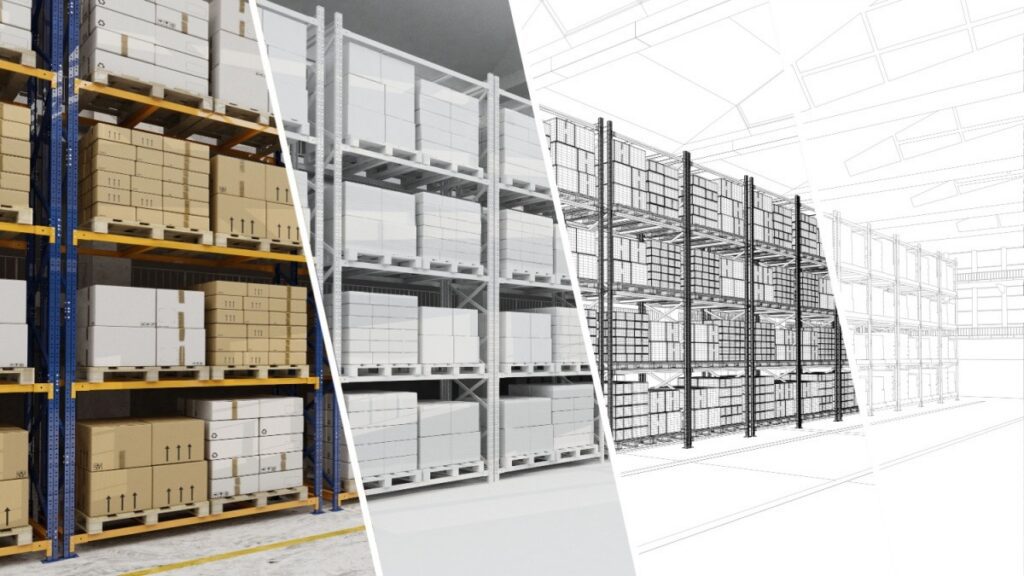
CAD design allows warehouse managers to visualize layouts, test configurations, and identify potential problems early. Instead of guessing what will work, you can see the plan before the installation begins, saving time, money, and frustration.
What Is CAD Warehouse Design?
CAD stands for Computer-Aided Design. In warehouse planning, CAD design refers to using specialized software to create a detailed layout of your facility before installing racking, shelving, mezzanines, or material handling systems.
A CAD layout can include measurements, aisle widths, rack heights, forklift travel paths, dock doors, exits, columns, staging zones, and more. It provides a clear blueprint for how your warehouse will operate once installation is complete. Instead of relying on rough sketches or quick calculations, CAD warehouse design provides a precise plan that can be adjusted and optimized before any equipment is ordered or installed.
Why CAD Warehouse Design Matters for Modern Warehouses
Warehouses today are under constant pressure to do more with less. Space is expensive. Labor is competitive. Shipping timelines are tighter than ever. That means warehouse storage systems must be designed for efficiency, not just capacity.
CAD design plays a major role in helping facilities maximize usable space while keeping operations safe and organized. It also makes it easier to plan for growth. If your business expands inventory or introduces new product lines, your warehouse layout must be adaptable.
CAD warehouse design supports this type of planning by allowing you to test different layouts and determine what works best for your workflow. It helps you avoid decisions that look good in theory but create major issues in real-world operations.
How CAD Design Helps You Visualize Storage Layouts Before Installation
One of the biggest advantages of CAD design is visualization. A warehouse can be difficult to picture accurately when you’re standing in an empty space or trying to plan upgrades around existing inventory.
CAD drawings make it easier to see how pallet racks, shelving, and work zones will fit together. You can view aisle spacing, storage density, and traffic patterns with far greater accuracy than a simple floor plan.
This visual clarity helps decision-makers identify potential problems early, long before installation crews arrive. It also helps ensure your warehouse racking system supports daily workflow rather than disrupting it.
Common Installation Errors CAD Planning Helps Prevent
When racking systems are installed without detailed planning, costly mistakes become much more likely. CAD warehouse design helps prevent many of the most common problems that cause delays and wasted investment.
Incorrect Rack Spacing
Rack spacing affects everything from storage capacity to forklift movement. If pallet racks are installed too close together, aisles become tight and unsafe. If they are installed too far apart, you lose valuable storage space.
CAD planning ensures that rack spacing is calculated correctly based on pallet size, forklift requirements, and workflow needs. This allows you to maximize capacity without compromising accessibility.
Improper Aisle Width
Aisle width is one of the most overlooked details in warehouse planning. Forklifts require adequate clearance to turn safely and retrieve pallets without impact damage. If aisles are too narrow, operators may struggle to maneuver, increasing the likelihood of rack damage and product loss. CAD design helps determine ideal aisle width based on forklift type, turning radius, and traffic flow patterns.
Overlooked Ceiling Height Restrictions
Warehouse ceiling height is valuable real estate, but it can’t be used effectively without careful planning. Without CAD design, warehouses sometimes install rack systems that are too tall or fail to account for sprinklers, lighting fixtures, HVAC ductwork, or fire code requirements. CAD layouts ensure that rack height is optimized while still maintaining safe clearance and compliance with building limitations.
Blocked Exits and Safety Zones
Safety regulations require clear access to exits, fire extinguishers, electrical panels, and emergency routes. A rack layout that blocks exits can create major compliance issues and may require costly reconfiguration after installation. CAD warehouse design helps ensure these safety zones remain clear and accessible from the start.
Inefficient Dock-to-Storage Flow
One of the biggest causes of warehouse inefficiency is poor flow from receiving docks to storage areas. If the layout forces forklifts to cross picking zones or travel long distances to place inventory, productivity suffers.
CAD planning enables you to design a layout that supports the logical movement of products. Receiving, staging, storage, and shipping zones can be positioned to reduce travel time and improve overall throughput.
Poor Use of Vertical Space
Many warehouses waste vertical space because they don’t plan racking heights properly or fail to design for future expansion. CAD design helps identify opportunities to increase vertical storage safely. By using height effectively, businesses can increase capacity without expanding the facility footprint.
How CAD Design Improves Safety and Supports OSHA-Conscious Planning
Warehouse safety should not be handled after installation. It should be built into the design from the beginning.
CAD warehouse design supports OSHA-compliant planning by enabling teams to map forklift paths, emergency routes, and safe clearance zones. It reduces the risk of installing systems that create bottlenecks or unsafe traffic patterns.
Better design also reduces the risk of forklift impact. When aisles are properly spaced, and rack placement supports smooth movement, operators are less likely to strike uprights or beams.
CAD design also helps minimize clutter by supporting logical inventory zones. When storage is organized and accessible, fewer items end up on the floor, reducing trip hazards and improving overall safety.
Reducing Downtime During Expansions and Relocations
Downtime is one of the most expensive parts of warehouse upgrades. Every day a facility is slowed by installation issues, productivity declines, and shipping schedules slip.
CAD warehouse design reduces downtime by creating a clear plan that installers can follow. When measurements, layouts, and configurations are finalized in advance, installation becomes more efficient and predictable.
This is especially valuable during warehouse relocations. When moving to a new facility, businesses often want to reconfigure their racking layout to improve efficiency. CAD planning ensures that the new setup is ready before equipment is moved, reducing delays during the transition.
How CAD Warehouse Design Supports Rack and Shelving Installation
CAD planning is not just helpful for layout visualization. It directly supports installation across multiple warehouse systems.
Pallet Racking Installation
CAD drawings help determine upright placement, beam height, aisle widths, and rack row alignment. This reduces installation errors and ensures the pallet racking system fits the facility properly.
Industrial Shelving Installation
Shelving layouts also benefit from CAD planning. Shelving zones can be designed to support picking routes, stockroom organization, and efficient product access.
Mezzanine Planning
Mezzanines require careful planning due to structural design, access points, and workflow integration. CAD warehouse design helps ensure mezzanines fit safely within the space and support the intended use, whether for storage, packing, or office space.
Planning for Future Warehouse Growth
One of the best reasons to use CAD design is scalability. A good layout should support growth without requiring a complete overhaul. CAD planning helps businesses design storage systems that can expand incrementally as inventory and demand grow.
What to Prepare Before Starting a CAD Warehouse Layout Project
To maximize value from CAD warehouse design, businesses should gather key information before planning. The more accurate the data, the better the design outcome. Important details include:
- Facility measurements, including length, width, and ceiling height
- Column placement, wall obstructions, and dock door locations
- Inventory types, pallet sizes, and product turnover rates
- Forklift specifications, including turning radius and lift height
- Current workflow patterns for receiving, picking, staging, and shipping
- Safety requirements, including exit access and clearance zones
- Future growth plans, such as new product lines or expanded volume
When these details are included early, CAD design becomes a powerful tool for building a layout that supports long-term performance.
Plan Smarter With Diversified Rack & Shelving
Warehouse upgrades should improve efficiency, not create expensive setbacks. CAD warehouse design helps prevent costly installation errors by ensuring that your storage layout is accurate, safe, and optimized before installation begins.
If you’re planning a warehouse expansion, relocation, or racking upgrade, Diversified Rack & Shelving is ready to help. We proudly serve warehouse managers and business owners throughout New Jersey, New York, and Pennsylvania with professional CAD planning, reliable rack systems, and expert installation support.
Contact Diversified Rack & Shelving today to request a quote and start planning an efficient warehouse layout built for long-term success.