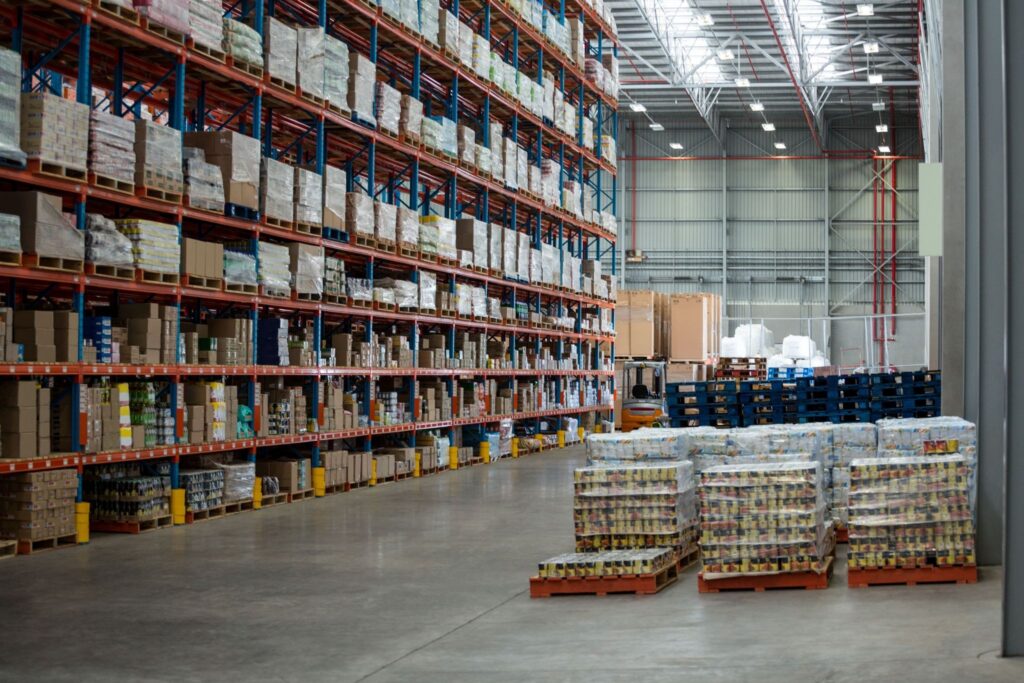
A warehouse is the operational heartbeat of your business. Every product that enters your supply chain passes through this central hub. When it runs smoothly, your entire business thrives. Orders go out on time, inventory levels stay accurate, and your team works efficiently.
However, many facility managers and business owners overlook a critical reality: layout inefficiencies, poor traffic flow, and improper storage utilization often act as invisible profit drains. You might look at your ledger and see rising labor costs or a dip in fulfillment speeds, blaming macroeconomic trends, when the real culprit is sitting right under your nose — literally built into the floor plan. To avoid skyrocketing labor costs or sudden safety incidents, supply chain managers must recognize early red flags of poor design before they compound into major financial losses.
Let’s pull back the curtain on the four major hidden costs of poor warehouse design and explore how sub-optimal layouts quietly erode your bottom line.
1. Wasted Square Footage: The Price of Dead Space
With industrial real estate prices and lease rates across New Jersey, New York, and Pennsylvania remaining at premium levels, every single square foot of your warehouse carries a dollar value. Yet, one of the most common design flaws is the failure to utilize a building’s true footprint — specifically, its vertical cube.
When warehouses rely on basic, low-density storage or generic floor stacking, they leave massive amounts of vertical space completely empty. This underutilized vertical space means you are paying to heat, cool, and light “dead air.”
Conversely, a sprawling, unorganized footprint forces you to expand horizontally before it is truly necessary. If your aisles are wider than your material handling equipment requires, or if your rack configurations don’t match your inventory profile, you are actively burning cash. The hidden cost here isn’t just a high rent bill; it is the premature, incredibly expensive decision to lease additional warehouse space or move facilities entirely, when a smarter, high-density racking design could have doubled your current storage capacity.
2. Labor Inefficiency: The High Cost of Redundant Steps
Labor is consistently one of the highest operational expenses in any supply chain facility. In a poorly designed warehouse, you’re paying for their travel time.
Consider the compounding cost of excessive travel times and redundant handling caused by a bad layout flow. If your high-velocity, fast-moving items (Class A inventory) are stored at the back of the facility rather than near the shipping docks, your order pickers are walking or driving forklifts an extra thousand miles every single year.
Every extra turn, choked bottleneck at a cross-aisle, or redundant touch-point where a pallet must be moved just to access another item adds up. If an employee spends just 10 minutes more per hour navigating a convoluted layout, that equates to over 60 hours of wasted labor per employee annually. Multiply that across a workforce of 20 or 50 people, and you are losing tens of thousands of dollars to pure layout friction.
3. Safety Risks & Compliance Fines: The Price of Compromised Aisles
When a warehouse layout begins to feel crowded due to poor design, organizations often make the mistake of compromising on space clearances to squeeze in more product. This is where hidden costs transform into catastrophic liabilities.
Cramped aisles, blocked emergency exits, and improper rack loading are direct invitations for OSHA violations, hefty compliance fines, and dangerous warehouse accidents. If your aisle widths are narrowed to below the manufacturer’s recommended turning radius for your forklifts, structural rack impacts become inevitable. Frequent forklift impacts weaken the integrity of your storage systems over time, eventually leading to catastrophic rack failures.
A single structural rack collapse can bring down entire bays of inventory, halting operations for days, ruining products, and, most importantly, putting your workforce at severe physical risk. The cost of workers’ compensation claims, increased insurance premiums, and legal fees following an accident will instantly eclipse the cost of hiring a professional to do the layout design right the first time.
4. Inventory Damage & Shrinkage: The Consequence of Restricted Accessibility
If your warehouse design doesn’t provide clear visibility and restricted, structured accessibility, your inventory suffers. Poorly planned layouts frequently result in the product being “lost in plain sight.”
When operators cannot easily access or see specific pallets due to deep, unorganized block stacking or incorrect rack applications (such as using standard selective racks for high-volume, first-in, first-out bulk goods), inventory sits. For businesses handling perishable goods, sensitive electronics, or consumer products with strict expiration dates, this leads to massive financial hits from product obsolescence and shrinkage.
Furthermore, when operators have to constantly shuffle three or four pallets out of the way just to retrieve the one they actually need, the risk of accidental product puncture, dropped loads, and structural rack damage skyrockets. You end up writing off thousands of dollars in ruined inventory simply because your layout made gentle, organized handling impossible.
The Solution: Partner with a Material Handling Expert
Fixing a broken warehouse layout requires more than just moving a few rows of shelving. It demands a deep data analysis of your stock-keeping units (SKUs), a clear understanding of your equipment capabilities, and a strategic vision for traffic flow. That is why partnering with a professional material handling and rack integration expert is essential to optimizing throughput and maximizing your return on investment (ROI).
This is where Diversified Rack & Shelving steps in. We don’t just sell steel; we engineer efficiency. Based locally and serving businesses across the tri-state area, our team specializes in analyzing your unique operational challenges to create custom layout designs. Whether you need to transition to a very narrow aisle (VNA) system, implement high-density push-back or pallet flow systems, or integrate structural mezzanines to capture that wasted vertical space, we provide the quality equipment selection and engineering expertise to transform your facility.
Stop letting bad design quietly drain your profits. If you are noticing signs of crowding, picking delays, or frequent close calls in your aisles, let our team help you unlock the hidden capacity in your existing space. Contact Diversified Rack & Shelving today for a professional warehouse space assessment and facility consultation. Let’s build a safer, faster, and more profitable operation together.