In the current industrial landscape, real estate is no longer just a line item; it is a premium commodity. As e-commerce continues to surge and global supply chains demand higher local inventory buffers, warehouse managers and business owners face a critical bottleneck: the physical limit of their four walls. When the floor reaches capacity, the instinctive response is often to seek more space, either through a costly building expansion or by relocating to a larger facility altogether.
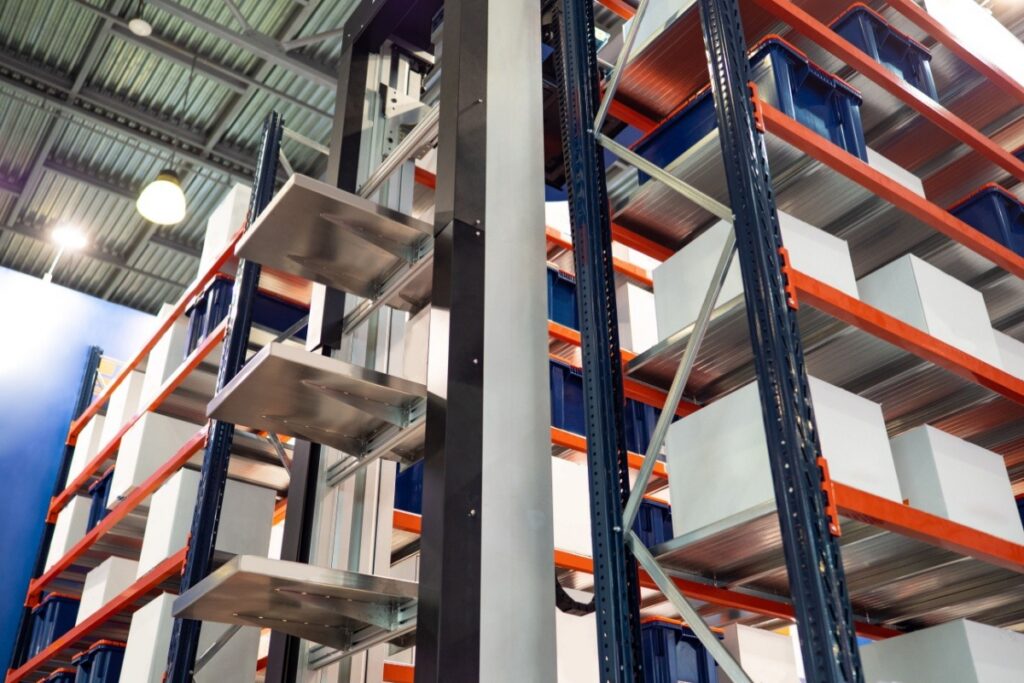
However, in a market where industrial rents are at historic highs and vacancy rates in key logistics hubs remain razor-thin, “building out” is often the most expensive path forward. Before committing to a secondary lease or breaking ground on new construction, facility managers must critically evaluate the financial and operational impacts of “building up” versus “building out.” By leveraging the cubic volume of an existing facility through high-density vertical storage, companies can often double or even triple their storage capacity without adding a single square foot to their property tax bill.
Real Estate Costs & Lease Obligations: Square Feet vs. Cubic Feet
The most immediate point of comparison is the raw capital expenditure required for expansion versus densification. In most metropolitan areas, the price per square foot of industrial real estate has seen double-digit year-over-year growth. A physical expansion involves not just the cost of materials and labor but also the long-term obligation to pay increased rent or a massive mortgage. Furthermore, relocating to a larger space introduces “sunk costs” such as moving expenses, security deposits, and the potential loss of a strategic location.
In contrast, high-density racking systems, such as Teardrop Pallet Racking, Drive-In Racking, or Push-Back systems, represent a one-time capital investment. While the upfront cost of premium steel racking is significant, it is a fraction of the cost of new construction. When calculated on a per-pallet-position basis, vertical storage almost always beats expansion. By utilizing the 20 to 30 feet of wasted “air space” above the floor, you are essentially gaining “free” real estate that you are already paying for in your current lease.
Operational Downtime & Speed of Implementation
Time is a hidden cost that many managers overlook. Physical expansion is a multi-month, if not multi-year, endeavor. It requires architectural plans, structural engineering, local zoning permits, and environmental assessments. Once construction begins, the disruption to the yard and existing loading docks can create logistical nightmares that stall throughput.
Vertical reconfiguration, however, can often be executed with minimal disruption. Professional installation teams can work in phases, retrofitting one aisle at a time while the rest of the warehouse remains fully operational. A comprehensive racking overhaul can be completed in weeks rather than months. For a business in a high-growth phase, the ability to scale capacity now—rather than waiting for a construction crew—can be the difference between capturing market share and losing it to a more agile competitor.
Labor Efficiency and Throughput
A larger warehouse footprint does not always equate to greater efficiency. In fact, “expanding out” often leads to a decrease in labor efficiency. As square footage increases, travel distances for pickers and forklift operators grow. More time spent traveling from one end of a sprawling facility to another means fewer picks per hour and higher labor costs per order.
By optimizing vertical space, you keep your inventory condensed. This reduces the “travel zone” for staff. High-density systems allow for more SKUs to be stored in a smaller footprint, streamlining the picking path. When combined with the right material handling equipment, such as reach trucks or narrow-aisle pickers, a vertical warehouse can significantly increase throughput compared to a wide, spread-out floor plan.
Tax Implications and Asset Depreciation
The financial nuances of these two paths extend into the realm of accounting. A physical building expansion is considered a “real property” improvement. This generally increases the property’s assessed value, leading to permanently higher property taxes. Furthermore, buildings are typically depreciated over a much longer timeline (often 39 years for commercial property), meaning the tax relief is spread very thin over decades.
Storage equipment, such as pallet racking and shelving, is classified as personal property or equipment. Under Section 179 of the tax code, equipment can often be depreciated much faster than real estate, frequently over 5 to 7 years. In many cases, businesses can take advantage of bonus depreciation to write off a massive portion of the investment in the first year. This provides an immediate cash flow benefit that a physical expansion simply cannot match.
The “Hidden” Costs of Expansion
Beyond the lease and construction costs, a larger physical footprint carries ongoing “hidden” expenses that erode your bottom line:
- Increased Utility Bills: More square footage means more space to light, heat, and cool. Even with LED retrofits, the energy demand of a larger building envelope is significantly higher.
- Insurance Premiums: Insurance costs are directly tied to the facility’s size and the structure’s replacement value. Expanding the building will almost certainly result in higher annual premiums.
- Maintenance Costs: A larger footprint means more roofing to maintain, more flooring to seal, and more dock doors to service. These recurring costs compound over the life of the building.
By staying within your current footprint and going vertical, you keep these fixed overhead costs stable while still increasing your revenue-generating storage capacity.
Partnering for Maximum ROI
The decision to expand or optimize is complex, but it is one of the most important financial choices a facility manager will make. Consulting with a material handling expert is vital for maximizing your ROI and ensuring that your structural choices align with your long-term growth strategy.
At Diversified Rack & Shelving, we provide tailored storage solutions that transform wasted overhead space into productive capacity. Our team specializes in identifying the racking systems that deliver the highest density for your unique inventory mix. Whether you are looking for new state-of-the-art systems or high-quality used racking to keep costs low, we have the expertise to help you scale efficiently.
Stop paying for space you aren’t using. Contact Diversified Rack & Shelving today for a custom site evaluation and a quote on new or used racking systems. Let us help you unlock the potential of your existing facility.